














It’s nice to reach a destination without even knowing it.
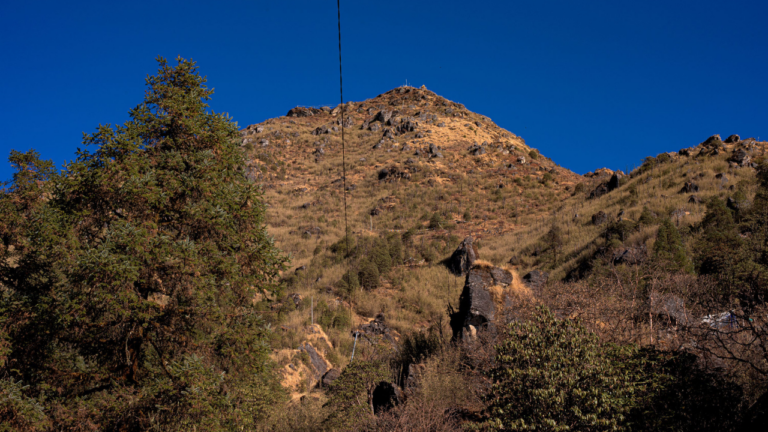
A friend shared this thought as we descended, reflecting on the walk we had early in the morning on New Year’s Day 2026. It was pitch-dark when we hiked to Ama Yangri, unsure of how far and steep it was, but we conquered it, stepping into the new year with a resolution felt in sweat and starlight.
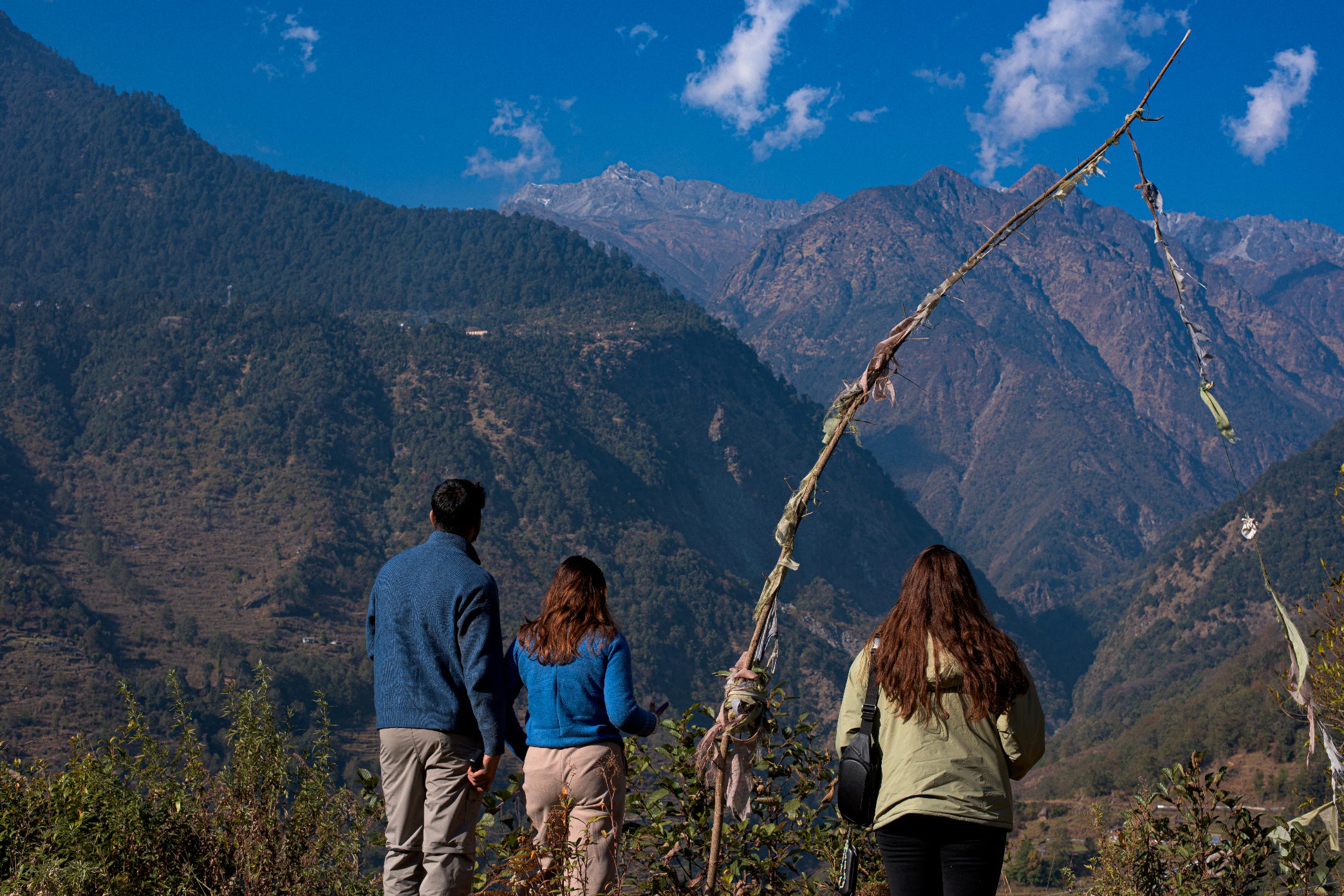
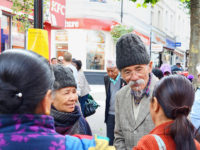
Our journey to Ama Yangri began in Kathmandu. A group of eight, we loaded into an SUV for the four-hour drive towards Melamchi, eventually winding our way up to the village of Tarke Gyang (2,500 m). Tarke Gyang is a village with only a handful of houses and hotels, multiple Buddhist stupas, and a new monastery under construction. From a neighbouring ridge, locals pointed out what they described as the last village of the Hyolmo community.
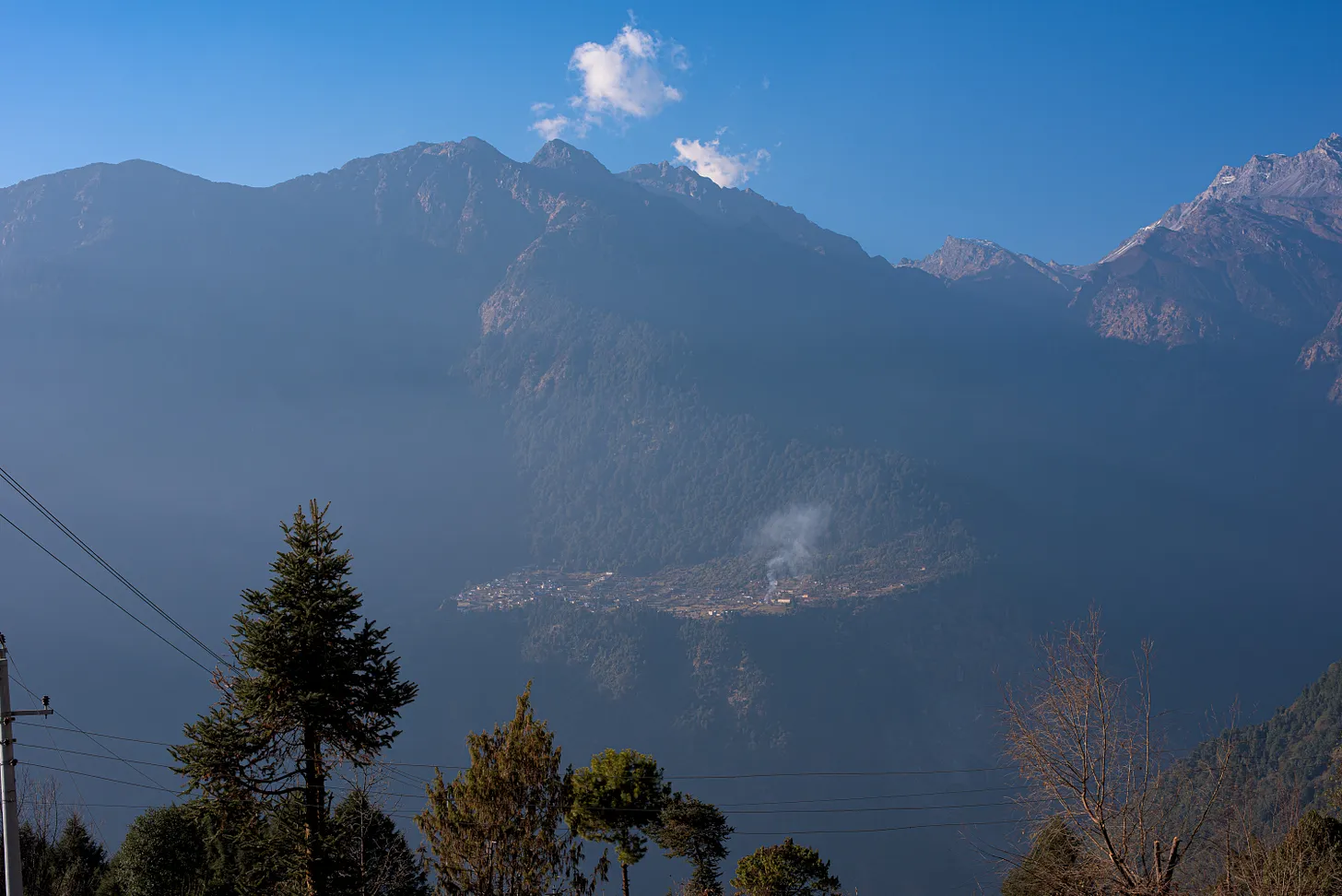
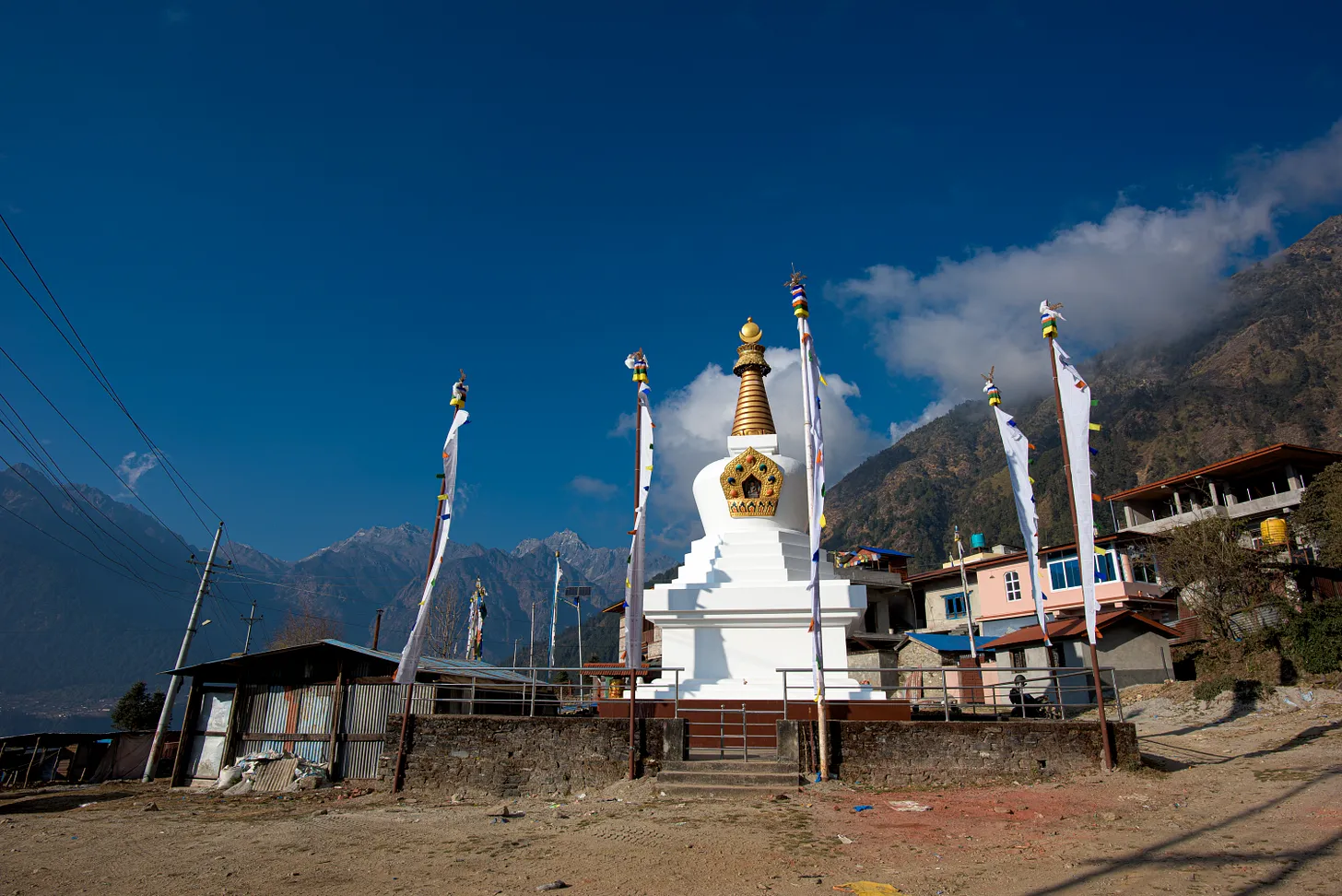
Tarke Gyang is a stop for most hikers, as the Ama Yangri Base Camp doesn’t have very accommodating hotels and tea houses for an overnight stay. So, we rested in Tarke Gyang for a night, knowing that our ‘morning’ would begin long before the sun.
At 3:30 a.m., we moved. We reached the Ama Yangri Base Camp (3,200 m) by jeep and began the steep ascent on foot. We walked in complete darkness, our torches guiding the way. Above us, just two days short of the full moon, the sky shimmered with stars. We walked steadily, sharing energy bars and quiet conversations, keeping ourselves warm against the biting air.
Hundreds of hikers lined the trail, their torches lighting up the path from the base to the very summit. In that moment, seeing the distance yet to be covered, the weight of the walk felt real. But we pushed on, with a shared silent motivation to greet the first light of 2026 from the top.
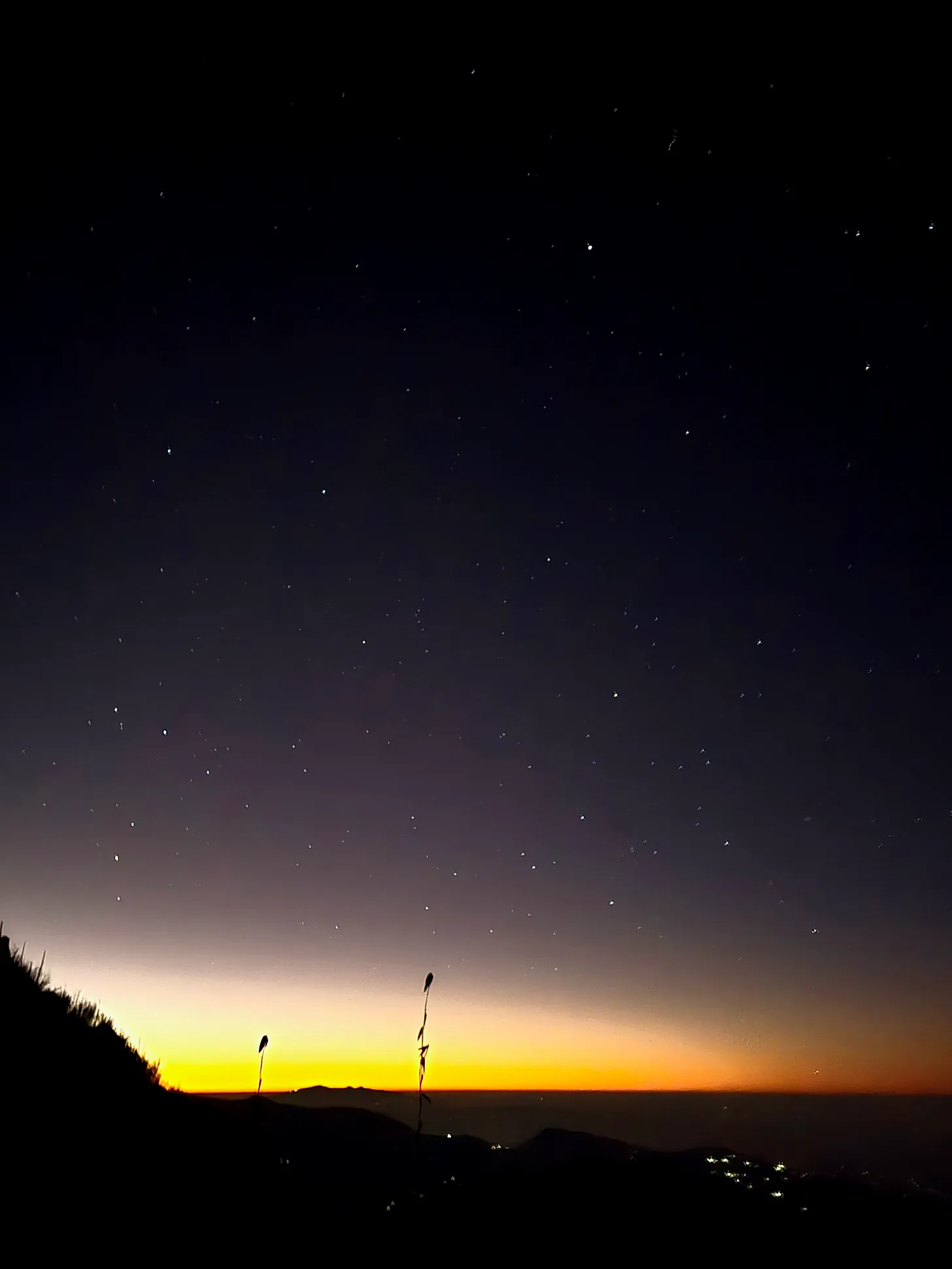
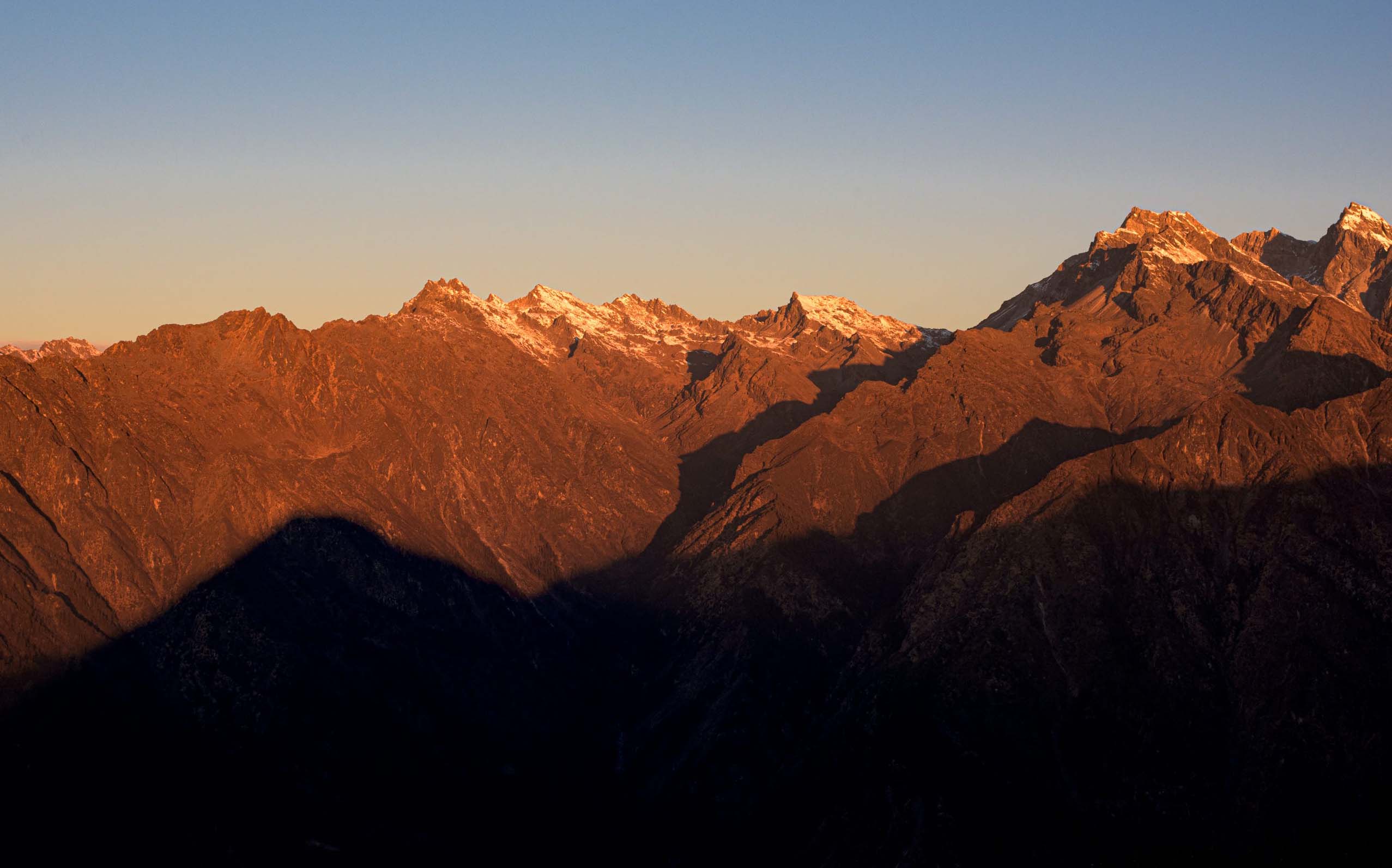
At 6:30, we reached Ama Yangri (3,770 m). We watched the sunrise, and the cool breeze made us realise that we had made it. Standing there, a 180-degree panorama of the Himalayas surrounded us, and seeing it, we made our wishes for 2026. As the sun finally broke over the horizon, the mountains glowed in hues of gold and rose, and the beauty felt surreal. The Langtang, Jugal, and Ganesh ranges stood visibly clear.
Ama Yangri carries a meaning: Ama for mother, yang for wealth, and ri for elevated hill. For the Hyolmo community, this mountain is a mother goddess and has long been revered. At the summit stands the pagoda-style Ama Yangri Zangdo Palri Gumba. Inside the sanctum sits a statue of Avalokiteśvara, while on the first floor there is a statue of Guru Rinpoche (Padmasambhava), honoured by Hyolmo lamas as a guiding deity.
While the winter air provided clear clarity for our New Year’s hike, for those seeking a different kind of magic, the spring season is best to witness the hill full of rhododendrons. There is a fair at Ama Yangri every year during the Nepali New Year in Baishakh (mid-April).